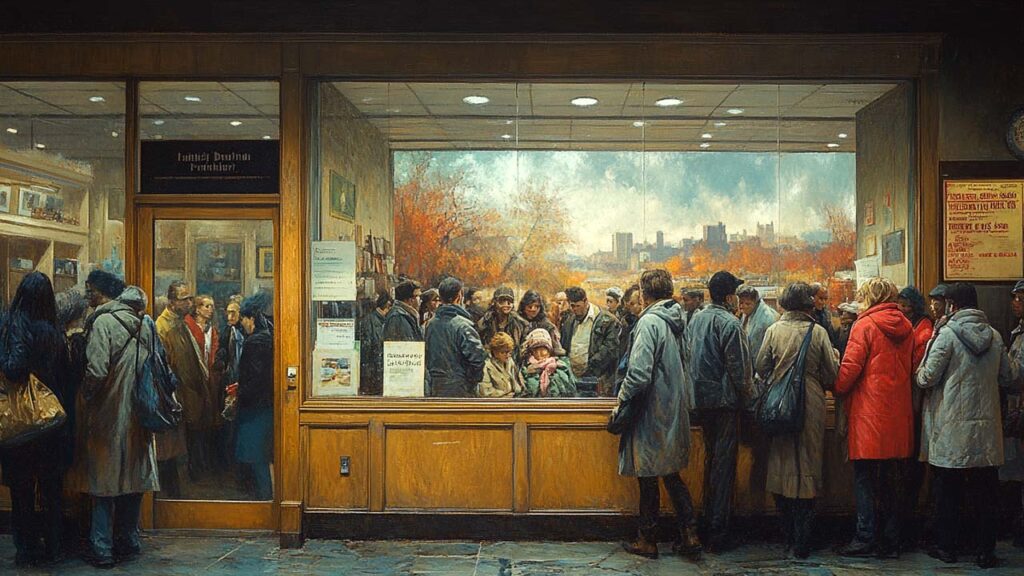
The Tragedy of the Commons in our Welfare State
While motivated from a positive desire to take care of the least in society, the modern American welfare system has many deep flaws that have both perpetuated poverty and destroyed real well-being. The tragedy of the commons is an analytical framework that can give insight into this phenomena. It is a tale of the public village green in a British town, in which many people led their sheep to graze on, and spent time dancing on it without end. Because of this constant use, the green was unable to grow back grass, and in place of their former source of food was a patch of filthy mud. Each individual was willing to exploit the green, yet had no understanding of the associated responsibility of ownership. Just like in the tragedy of the commons, the current welfare system is a set of publicly available goods, such as housing, healthcare, and education. While access to each of these things for all is standard in most western societies, the way in which the American government gives them out emphasizes each individual’s lack of ownership, and accelerates the same process that destroyed the commons. An ever-growing set of individuals being given these things for free is enabled to use them with no respect for the labor of others required to produce them. The solution to this problem is not a total stripping of welfare, but rather a restoration of ownership and humanity to the poor through institutions that empower private charity to replace government welfare.
Public housing projects are as close a visual representation of the commons as can be imagined in the 21st century. The trash in the hallways and strange smells coming from each unit is not a result of poverty, but rather a result of lack of care. Individuals who have very little feeling of ownership, but a great incentive to take advantage of their only housing opportunity, choose to denigrate rather than beautify the already sub-par conditions. There are always some who choose to take what they have and beautify it, but their exceptionality clarifies the attitude of disrespect shared by almost everyone else. To see the squalor in public housing projects as anything but a tragedy of the commons situation is to remove the humanity of the people who live there. They all have a choice, but the institutional set up has made the choice of exploitation the overwhelmingly obvious one. When they all have the “learned hopelessness” mentality that they will never own anything for themselves, the inhibitions of destruction present in most other people are stripped away. It is not that the owners of private homes are necessarily better people, but rather that they have incentives that make cultivation and beautification over time the obvious choice.…