Labor Day’s History of Violence
Every first Monday in September, Americans get a three-day weekend. Barbecues fire up, stores run sales, and politicians give speeches about “the dignity of work.” Labor Day is sold as a straightforward tribute to the American worker. But, as with most official retellings of historical turning points, the real history of Labor Day is a messy and violent one that blended a genuine desire to improve working standards with plenty of exploitative and self-serving activists, agitators, and politicians.
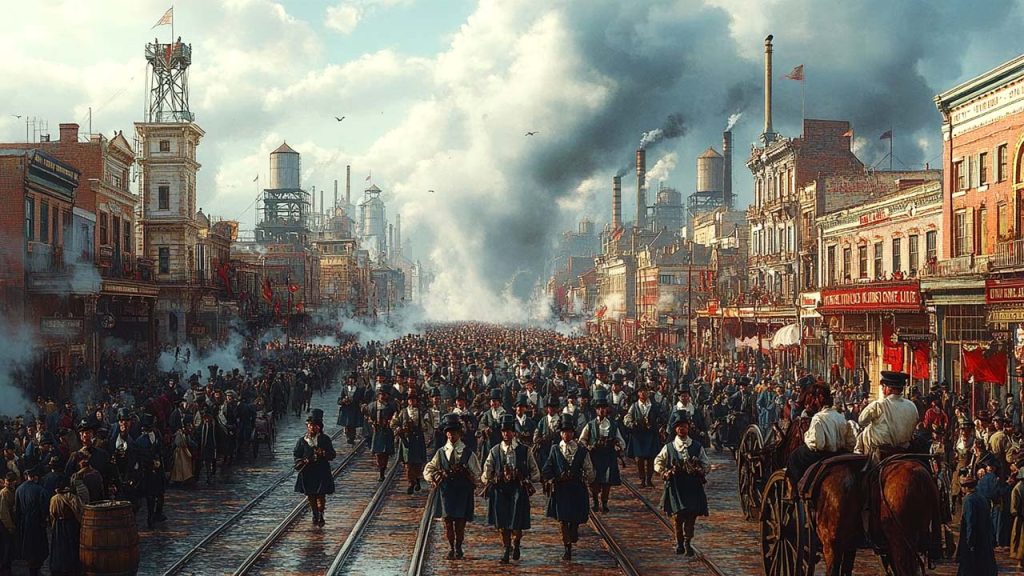
In the late 1800s, American workers faced long hours, dangerous conditions, and low pay in factories, mills, and railroads. Unions were growing, and they wanted recognition. On September 5, 1882, the Central Labor Union organized the first big Labor Day parade in New York City. About 10,000 workers marched from City Hall carrying signs and making speeches demanding better working conditions.
Noble enough, and a logical counter-movement to an American economy that was rapidly growing and industrializing, and was willing to squeeze workers to the brink to provide fuel for the engines of American progress.
Two men get competing credit for the idea. Peter J. McGuire, a carpenter and co-founder of the American Federation of Labor, claimed he proposed a special day for workers in 1882. Matthew Maguire, a machinist and secretary of the Central Labor Union, is also strongly credited, and some contemporary accounts give him the edge. Either way, the parade was a union event, and the idea caught on. Several states passed Labor Day laws in 1887.