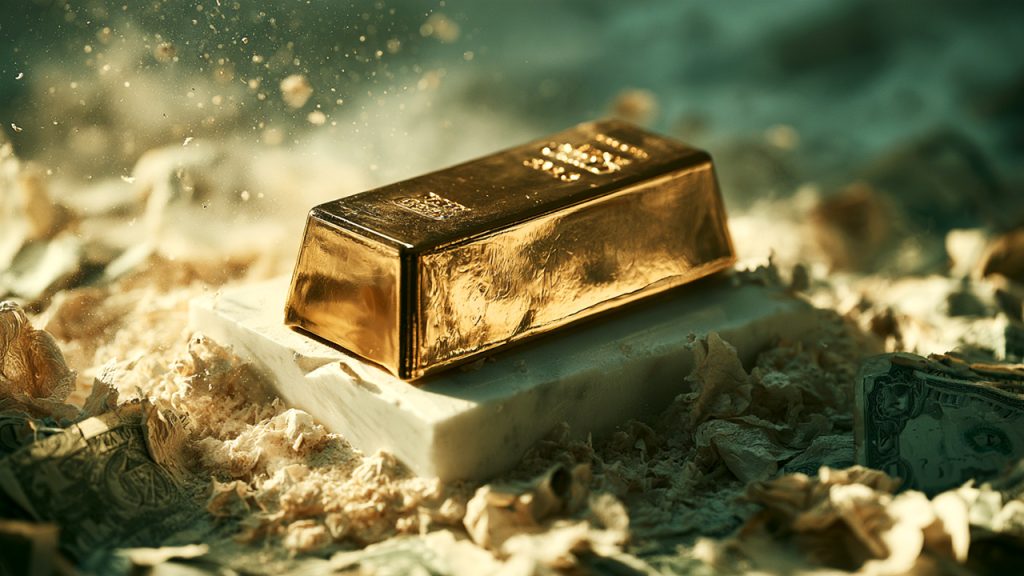
Gold, Fiat Money, and the Illusion of Wealth
Money emerged from the free market as a way for strangers to cooperate, with gold and silver chosen for their durability, scarcity, and universal acceptance. When the government replaced commodity money with paper it could print at will, it turned the Federal Reserve into a counterfeiter whose new dollars enrich early recipients at the expense of savers and retirees.
The following article was originally published by the Mises Institute. The opinions expressed do not necessarily reflect those of Peter Schiff or SchiffGold.
In the 1964 film The Pawnbroker, Rod Steiger plays Sol Nazerman, a Holocaust survivor who operates a pawnshop in Harlem. In one memorable scene, his young assistant asks him what he believes in. “Money,” he answers. Money has extraordinary powers. It can buy comfort, luxury, relief from pain, sometimes even life itself. Then he adds, his anger driving him:
Now you listen to me and listen very carefully. Next to the speed of light which Einstein says is the only absolute in the universe, second only to that I rank money.
Believe me, that’s all you need to know.